The Princess Royal Class Locomotive Trust uses cookies to ensure you have the best possible online experience. By continuing to use this site you consent to the use of cookies in accordance with our cookie policy.
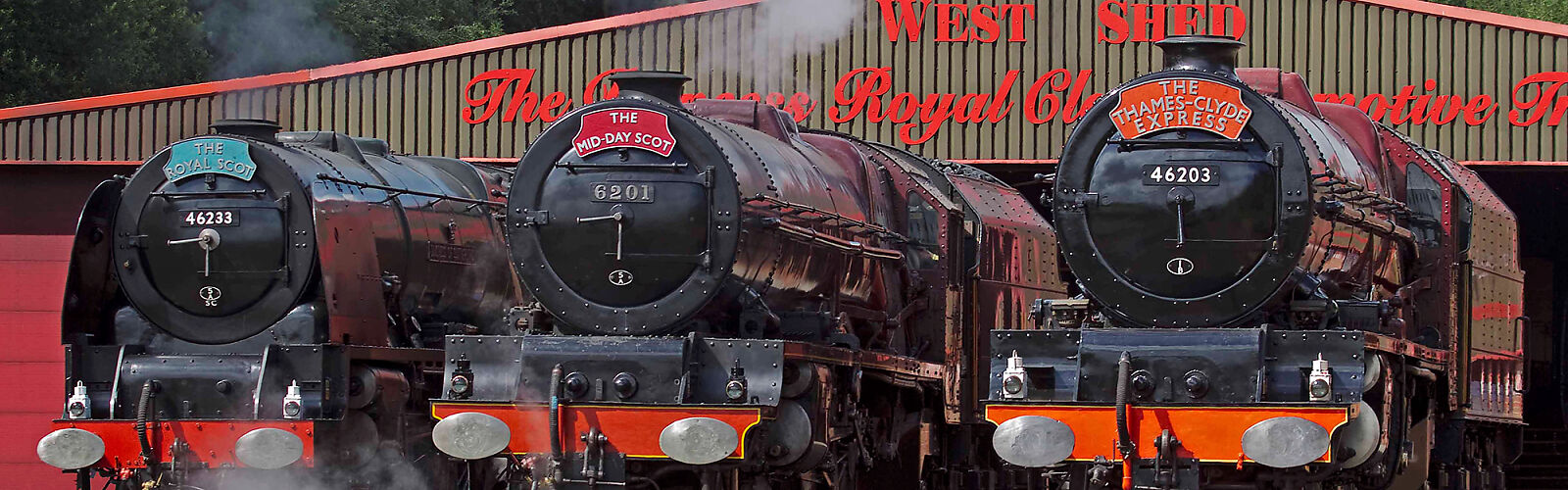
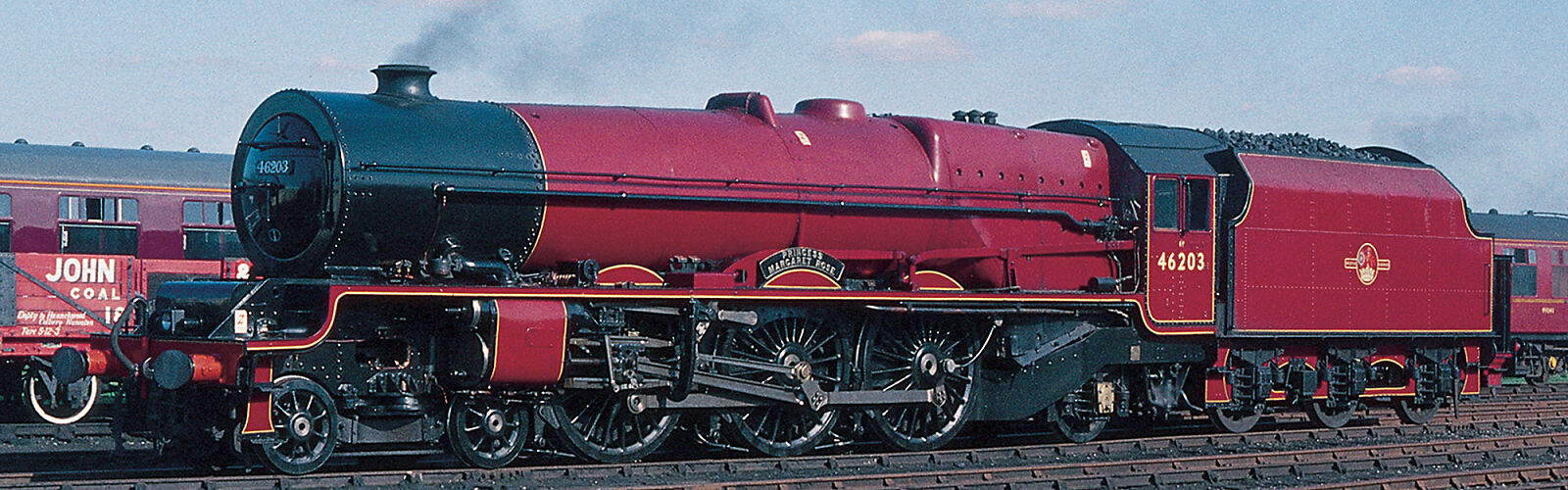
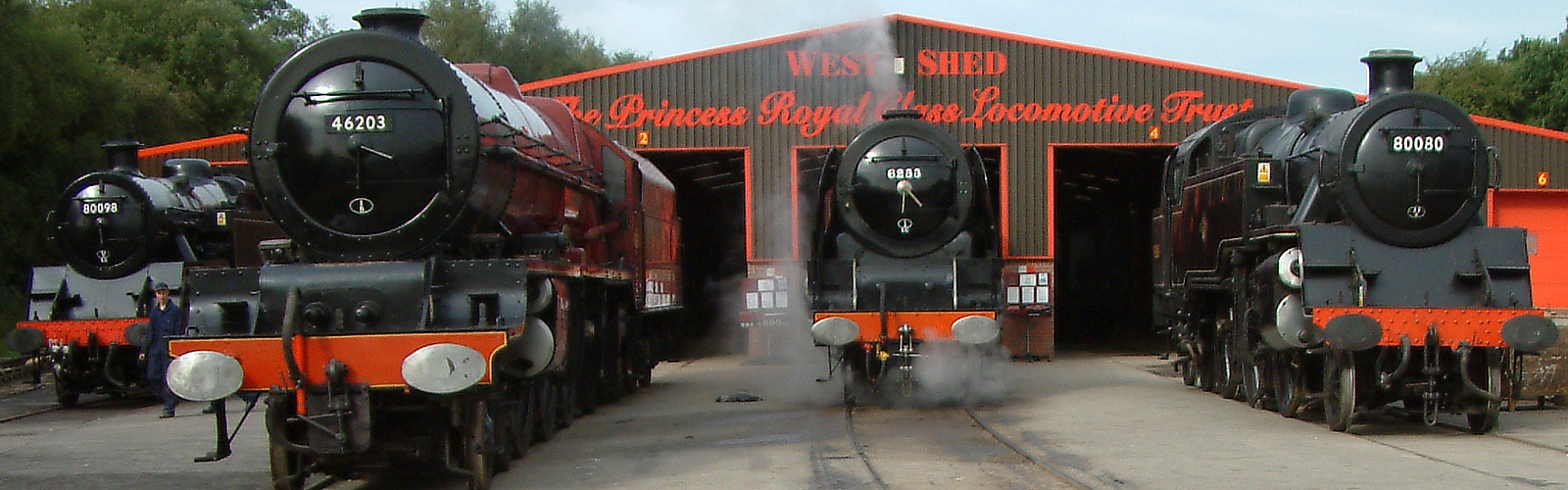

6233 Duchess Of Sutherland
Steam Locomotive
Under Restoration
Built in July 1938 at Crewe Works for the London, Midland & Scottish Railway (LMS) under the design of Sir William Stanier, the DUCHESS OF SUTHERLAND is an iconic example of the mighty Princess Coronation Class 4-6-2 “Pacific” steam locomotives.
After withdrawal in 1964, the locomotive embarked on a destiny of preservation. It served as a static display at the Butlins Ayr holiday-camp display and ultimately found itself under the custodianship of The Princess Royal Class Locomotive Trust (PRCLT) in 1996. Under the Trust’s care it was meticulously restored, returning to operational main-line status and gaining new fame — including the honour of hauling the Royal Train.

46203 Princess Margaret Rose
Steam Locomotive
Static Display
Built at Crewe Works in July 1935 as works number 253, LMS 6203 PRINCESS MARGARET ROSE (later BR number 46203) is a striking example of The Princess Royal class designed by Sir William Stanier.
After withdrawal in October 1962, it was acquired by Billy Butlin and displayed at Pwllheli holiday camp before eventually transferring to the Midland Railway Centre in Butterley. In 1988 PRCLT purchased the locomotive and by 1990 restoration brought it back to main-line operation.
It operated on charters until 1996, after which it has been on static display in the WEST SHED Museum, awaiting funds for a future overhaul.

80080 - BR Standard Tank
Tank Locomotive
In Service
Built by Brighton Works in December 1954, 80080 belongs to the BR Standard Class 4 2-6-4T family — a class developed for suburban and secondary services under the R. A. Riddles standard locomotive programme. During its BR service life, 80080 worked commuter routes—initially on the London, Tilbury & Southend (LT&S) line in the Eastern Region—and later in North Wales following relocation.
After withdrawal in 1965, the locomotive languished in a scrapyard for about fourteen years, vulnerable to the elements and being scavenged for parts. Preservation began in earnest in 1980, and by 1987 80080 was back in steam, resuming main-line and heritage operations.

80098 - BR Standard Tank
Tank Locomotive
Under Restoration
Built by Brighton Works in December 1954, 80098 belongs to the BR Standard Class 4 2-6-4T family — a class developed for suburban and secondary services under the R. A. Riddles standard locomotive programme. During its working life, 80098 was initially assigned to Plaistow (33A), operating commuter services on the London, Tilbury & Southend (LT&S) lines.
Following withdrawal, 80098 was sold to a scrapyard in January 1966, where it remained until November 1984, when the 80080 Locomotive Holdings Group purchased it, initially intending to use it for spare parts. By August 1998, 33 years after its last steam run under BR, 80098 steamed again in preservation.
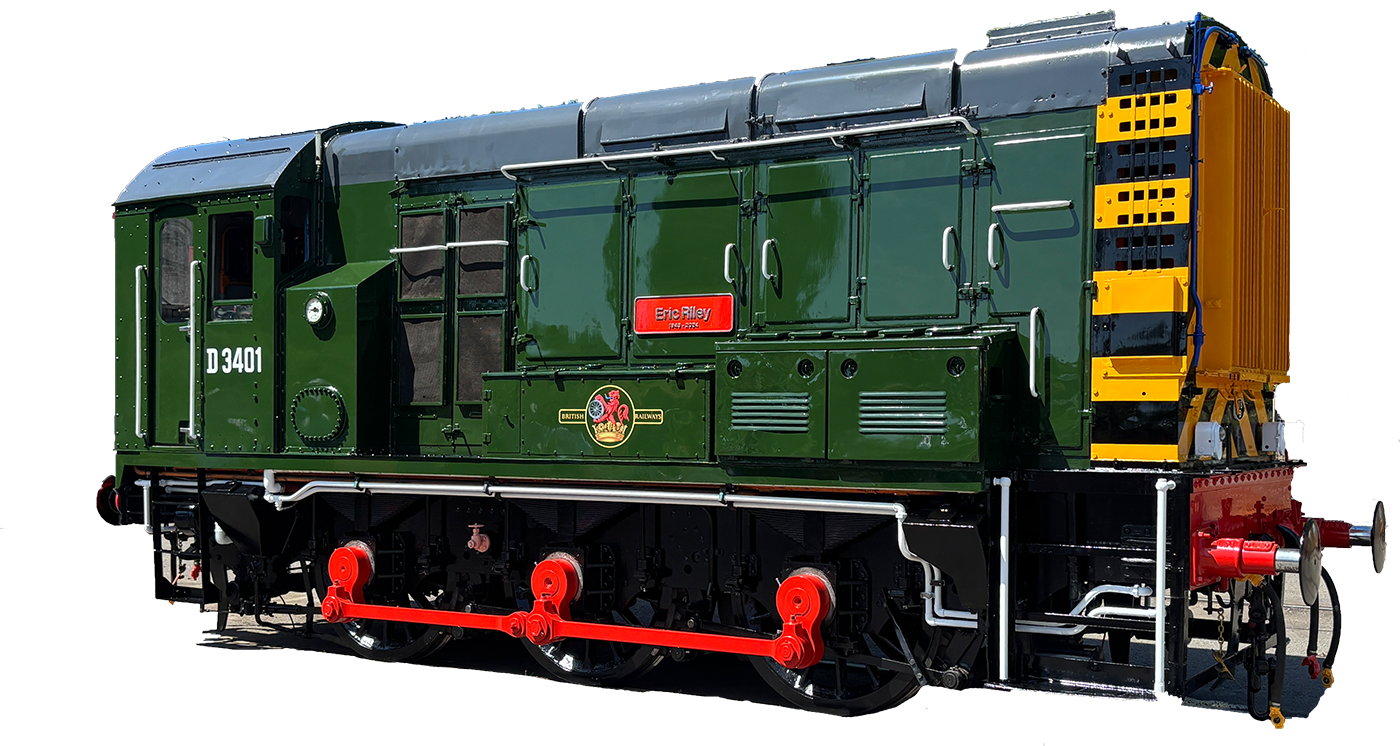
D3401 - Diesel Shunter
Tank Locomotive
In Service
D3401 is a British Rail diesel shunting locomotive dating from the early years of railway modernisation in the 1950s. Built at Derby Works in 1957, it is part of the highly successful Class 08 family—engines designed to replace steam locomotives in yards and depots across the country. These robust and versatile machines quickly became the backbone of British Rail’s shunting operations, valued for their reliability, simplicity, and ease of maintenance.
During its working life, D3401 was employed primarily on shunting duties, moving wagons and assembling trains in busy industrial and dock environments. Early in its career, it operated in South Wales, including Cardiff and Swansea, before later transfers took it to other regions of the network. Like many locomotives of its class, it experienced a long and varied service life, adapting to the changing demands of Britain’s railways during the transition from steam to diesel traction.

45000 - LNWR Chairmans Saloon
Carriage
Static Display
Built in 1920 as a luxurious private carriage, Saloon 45000 was originally commissioned for the Chairman of a railway company, intended to travel in comfort and style across the network. Over the decades, it developed a star-studded history, serving royalty (including members of the Royal Family) and even Winston Churchill, cementing its role as one of Britain’s most prestigious railway rolling stock.
Today, Saloon 45000 is displayed at WEST SHED, where visitors can glimpse into its refined compartments and imagine the lives of those who once traveled in its luxury. It’s more than a carriage — it's a preserved chapter of Britain’s railway and royal history.

45050 - L&YR Dynamometer Car
Carriage
Static Display
Built in 1912 by the Lancashire & Yorkshire Railway, 45050 is a rare and historically significant engineering vehicle designed to measure and record locomotive performance. Unlike a standard passenger coach, the dynamometer car houses a central table fitted with chart recorders and instrumentation that tracks parameters such as drawbar pull, train speed, distance, gradient, and fuel and water consumption as the train moves.
Today, 45050 is part of the Trust’s static display collection, where it stands as a fascinating artifact of early 20th century railway engineering. It gives visitors a rare window into how railways measured and calibrated the power and efficiency of steam locomotives in their heyday.

6320 - Observation Saloon
Carriage
Static Display/Available for hire
Saloon 6320 is a rare and distinguished carriage with a rich heritage. Owned by The Princess Royal Class Loc locomotive Trust since 2001, it is believed to be the only 60-ft LMS inspection saloon still in existence designed to allow railway officials or VIPs to travel in comfort, observe operations en route, and inspect track and infrastructure—often serving behind high-profile trains.
At present, 6320 is based at WEST SHED (Midland Railway - Butterley, Swanwick Junction). It has recently been repainted and is still requires some maintenance, under the care of the Trust. Its unique status, operational potential, and historic charm make it one of the flagship carriages in the Trust’s collection.